Primary market
Richmond Region
Downtown Richmond, the convention core, nearby hotels, and the surrounding Central Virginia corridor create a practical event market with several distinct operating lanes.
About us
Trade Show Services of Richmond works with exhibitors that need booth strategy, fabrication, graphics, freight timing, labor leadership, AV planning, and venue coordination moving together instead of colliding at the last minute.
Convention-center work downtown behaves differently from raceway, hotel, and museum programs.
Graphics, freight, labor, AV, and venue approvals all need one shared sequence before move-in week.
Repeat exhibitors need a system for refresh, storage, and reuse, not a one-off scramble every season.
Primary market
Downtown Richmond, the convention core, nearby hotels, and the surrounding Central Virginia corridor create a practical event market with several distinct operating lanes.
Active venues
The live venue set spans convention centers, raceway properties, hotels, museums, theaters, and regional event spaces that all call for different scheduling and support assumptions.
Active locations
Coverage extends through Richmond and outward into Fredericksburg, Williamsburg, Petersburg, Charlottesville, and other nearby corridors that affect staffing and freight rhythm.
Richmond trade show work rewards discipline long before the first crate reaches the dock. A strong program starts with the venue, the floor plan, the service list, the deadline chain, and the people who will own the handoffs once the calendar gets tight. Exhibitors usually do not need more noise around the work. They need a partner that can hold the details together from first brief through final outbound release.
That matters because the market is not a single venue story. Downtown convention activity, raceway buildings, conference hotels, museum spaces, suburban programs, and regional destinations all ask for different production choices. A booth that feels effortless in one building can become expensive or awkward in another if access, labor, utility ordering, or guest flow are misread early.
Our view is simple: the room should shape the plan. That means reading venue procedures, dock timing, material handling, technical support, registration needs, and the path from install to open hours before design decisions are treated as final. When that work is done early, the event team has a better chance of protecting both presentation quality and show-week calm.
We also think the strongest booth strategies stay practical. Buyers are comparing fit, budget, reuse, freight pressure, labor complexity, and how the exhibit will perform once the crowd starts moving. Custom fabrication, modular systems, rentals, and managed multi-show programs all have a place in Richmond, but they only make sense when they match the actual event conditions.
The city rewards teams that can move cleanly between large exposition floors and smaller meeting environments. A convention-center booth may need heavier dock discipline and more show-service coordination. A hotel program may need tighter room turns and stronger guest-flow planning. A sponsor activation may need more attention on atmosphere, staffing, and hospitality. We build around those differences instead of forcing every job into the same pattern.
That approach extends to the less-visible parts of the work. Graphic production, AV ordering, labor calls, packing logic, warehouse timing, electrical planning, and strike coordination are all part of the same business case. If any of those pieces are treated as secondary, the whole program becomes more fragile once move-in week arrives.
Repeat work also benefits from structure. Teams that appear in Richmond more than once do not need to rebuild every element from zero, but they do need a disciplined system for storage, refresh cycles, graphics swaps, freight routing, and the adjustments that come with a new venue or a new audience. Reuse only helps when it stays organized.
Multiple stakeholders are usually involved, and they rarely care about the same thing. Brand teams want a stronger story. Operations wants the dates to hold. Procurement wants scope clarity. Leadership wants risk under control. We treat those concerns as part of one planning conversation rather than separate meetings with different assumptions.
Venue rules stay at the center of that conversation. Dock access, rigging limits, service corridors, utility deadlines, and strike windows all affect the final budget and the final shape of the booth. A display that looks polished on paper can still fail if the room, the crew, and the schedule are not aligned before the first truck is released.
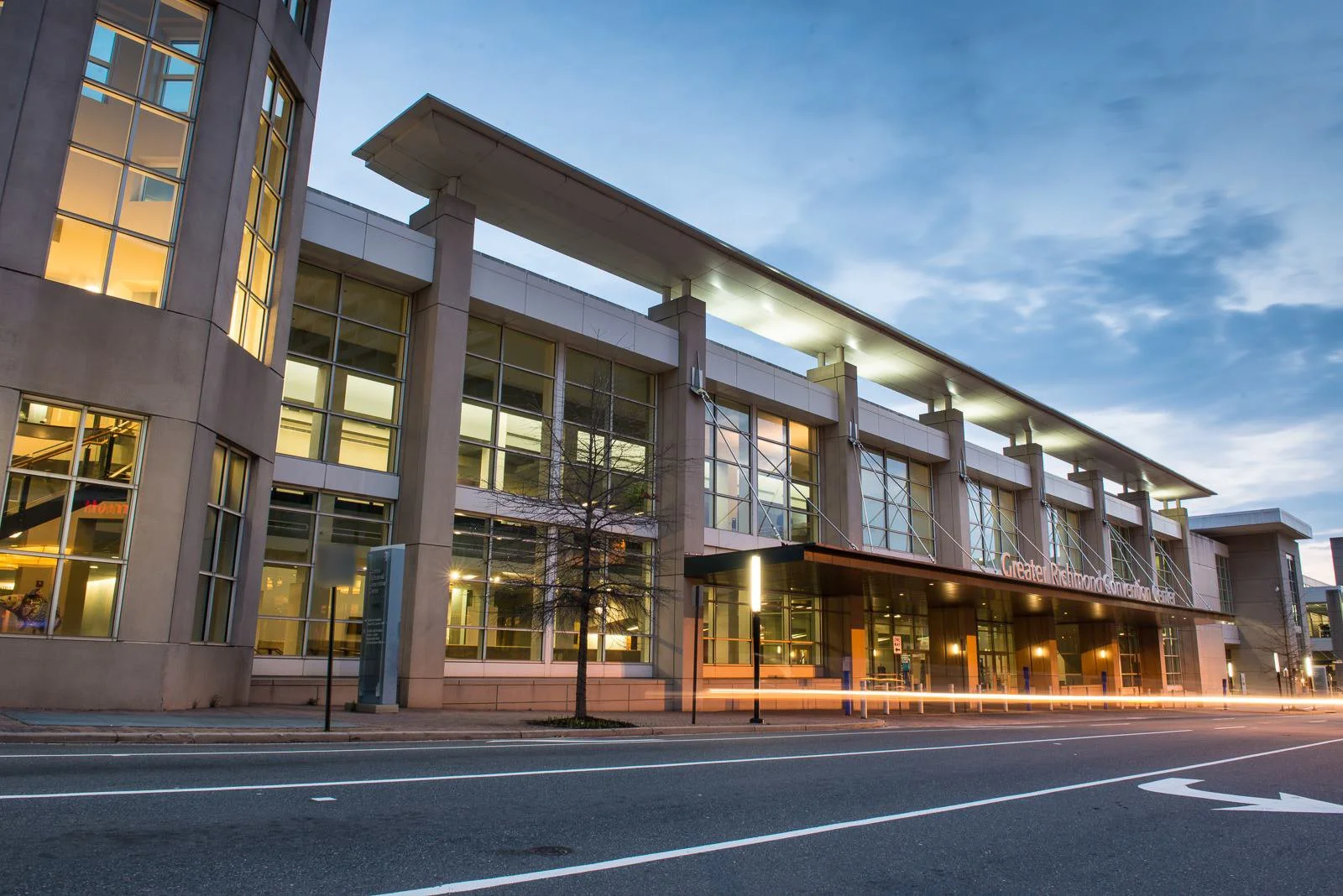
Greater Richmond Convention Center, nearby hotel inventory, raceway venues, and regional support properties each call for different assumptions about labor, staging, and attendee movement. A careful team tests those assumptions early, then confirms them again before freight and labor are fully committed.
The same discipline shapes the service mix. Booth design, fabrication, rental systems, AV support, project management, install and dismantle, and show-site supervision all need to point toward the same result: a booth that opens cleanly, performs during live hours, and comes out of the building without creating another problem at the end.
A strong first conversation usually covers the date, the venue, the footprint, the audience, the freight path, the staffing plan, and the event outcome. If the booth is expected to drive leads, support demos, host executive meetings, or create stronger sponsor visibility, that should shape the design and production path from the start.
That is the standard behind the business. Keep the work grounded in the venue. Keep the scope grounded in the deadline. Keep the execution grounded in what the field team actually has to do. When those three things stay aligned, the result is a calmer show week and a stronger platform for the next event.
Richmond buyers usually recognize the difference quickly. The stronger answer sounds less like a polished pitch and more like an experienced team explaining how the job will really move through the city, through the building, and through the live event itself.
Primary market
Downtown Richmond, the convention core, nearby hotels, and the surrounding Central Virginia corridor create a practical event market with several distinct operating lanes.
Active venues
The live venue set spans convention centers, raceway properties, hotels, museums, theaters, and regional event spaces that all call for different scheduling and support assumptions.
Active locations
Coverage extends through Richmond and outward into Fredericksburg, Williamsburg, Petersburg, Charlottesville, and other nearby corridors that affect staffing and freight rhythm.
Labor positioning
The public claim stays grounded in venue, organizer, and event-specific requirements rather than making blanket assumptions about every property.
Operating context
Richmond work gets easier when the brief names the venue, the freight path, the staff plan, and the handoff between install and live show before anything is priced. Those basic facts usually determine whether a booth will feel under control or overly rushed once the room starts filling.
Teams showing up more than once need a way to reuse what is worth keeping and refresh what has to change. Graphics, hardware, packing logic, storage, and travel all matter more when the assignment repeats across several dates or several properties.
Venue restrictions are part of the business case. Dock access, utility deadlines, catering control, rigging limits, and strike windows all shape the order in which the booth can be assembled and the amount of labor it will take to do the job well.
The surrounding market matters too. Downtown Richmond, Henrico, Chesterfield, Hanover, New Kent, and the wider Central Virginia corridor each create slightly different expectations around movement, staffing, and arrival timing. A useful plan keeps that geography visible from the beginning.
The goal is straightforward: make the project easier to scope, easier to trust, and easier to execute. When that happens, the booth does more than look good. It works the way the event actually needs it to work.